


The right meditation tool helps you make room for the practice you want to return to. That might mean sitting comfortably, listening to guidance, or choosing an object that carries a personal intention. You can begin with a chair and timer you already own; a thoughtfully chosen addition can make the space feel more personal.
This guide compares ten meditation tools by purpose, space, care, and everyday use. Start with the moment you want to create—an unhurried morning, a pause after work, or a ritual of reflection—then choose what supports it.
Choose a tool for the moment you want to create
| If you want… | Consider… | Check first |
|---|---|---|
| A comfortable place to begin | A supportive chair or cushion | Height, stability, and room to change position |
| A clear beginning and end | A timer, bell, or singing bowl | The sound, controls, and people sharing the room |
| Someone to explain the practice | A guided recording or teacher | The approach, session length, and any subscription |
| A hands-on pause before or after sitting | A desktop Zen garden | Tray size, included pieces, and storage |
| A visible reminder of a personal intention | A stone, crystal, or meaningful keepsake | Its meaning to you and a secure place to keep it |
| A familiar atmosphere or closing reflection | Incense, a light, or a journal | Scent preferences, safe use, and preparation |
Meditation gadgets, guided audio, or ritual objects?
Meditation gadgets: a dedicated device may offer timing, audio, or feedback. Check exactly what it does, whether it needs charging, and whether an app or subscription is required. A simpler timer may fit when you mainly want a quiet ending cue.
Guided audio: choose it when you want instructions and reminders throughout the session. The teacher's approach matters more than adding another object to your space.
Ritual objects: choose them when a visible symbol, a sound, or a deliberate movement helps you mark a meaningful moment. A garden, bowl, or keepsake can become part of your own practice without a screen or daily score.
1. A meditation cushion or supportive chair
A seat provides physical support. Compare stability, height, firmness, and how easy it is to change position. A cushion is an option for floor sitting, not a requirement; a chair may suit your body and room better. Do not hold an uncomfortable position to match a photograph.
Before buying: try a short session with your existing seat. Notice the support you actually want rather than choosing by a prescribed pose.
2. A simple timer
A timer marks the end of a session without requiring repeated clock checks. Your phone may already do this job. Compare how easy it is to set, whether the ending sound is adjustable, and whether notifications can be silenced.
Before buying: test the sound at a comfortable volume. A dedicated meditation gadget is optional, not evidence of a better practice.
3. Guided recordings or a teacher
Guidance explains what to do and can offer reminders when attention wanders. A recording provides repeatable instruction; a live teacher may offer opportunities to ask questions. Background music, a decorative object, and a timer do not provide the same kind of instruction.
For a focused comparison, see our guide to guided meditation tools for beginners.
For a longer reflection on returning to guided practice, read our 30-day Joe Dispenza meditation diary.
4. A desktop Zen garden
A desktop Zen garden gives your hands a place to slow down through arranging stones and drawing lines in sand. Before or after sitting, you might smooth yesterday's pattern, make one new line, and name an intention for the day. This is a simple Zenify suggestion for a personal ritual: a way to mark a new beginning or set aside what you are ready to leave behind. For the cultural roots of these gardens, explore our guide to Japanese Zen garden philosophy.
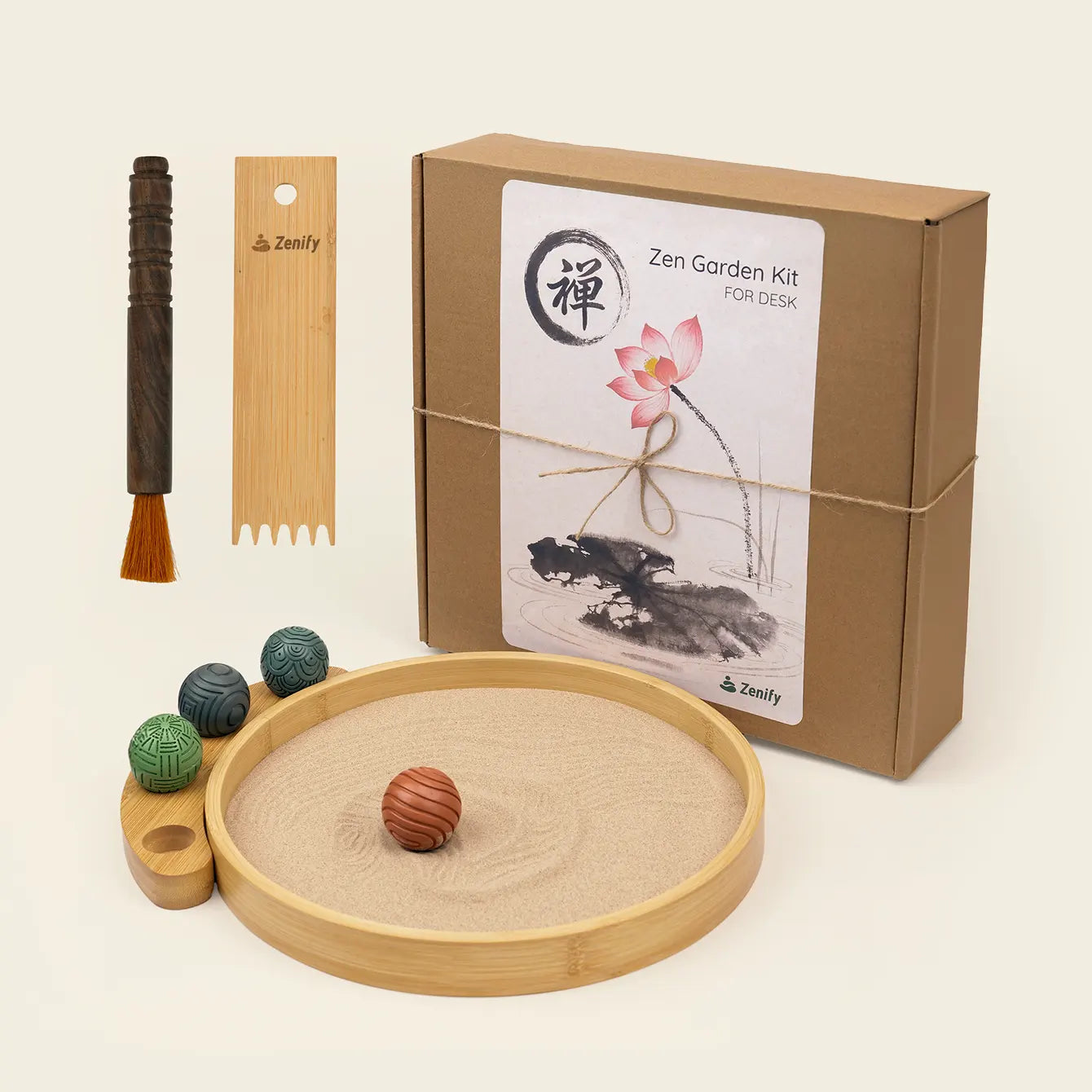
Before buying: measure the available desk area, check the included pieces, and consider loose sand, storage, and small parts. Compare the actual designs in our Zen garden collection; materials and contents vary by product.
5. A stone or crystal as a focus object
A stone or crystal can offer a tactile focus and a place to attach a personal meaning: a wish for courage, a reminder of someone you love, or an intention for a new chapter. Choose an association that speaks to you, alongside the texture, weight, and appearance you enjoy. A familiar keepsake can carry this role too.
Before buying: check its size and surface. A sphere needs a stable place to rest so it cannot roll off a table. Explore our crystal spheres for their material, design, and symbolic meaning.
6. A singing bowl or small bell
A bowl or bell makes an audible cue for the beginning or end of a session. If you enjoy listening, you might simply attend to the sound as it fades. A sound-producing object is different from an audio lesson that explains a technique.
Before buying: listen to a sample if available, check what accessories are included, and consider the people sharing your space. Choose a comfortable volume; silence is also an option. Browse our singing bowls and sound tools to compare the objects and included accessories.
7. Incense and an appropriate holder
Lighting incense can mark the moment you step into practice: prepare the holder, light the incense, and bring to mind what you want to honor that day. Choose a scent you enjoy and respect the preferences of anyone sharing the room. An unscented space can be just as intentional.
Before buying: check the incense format and holder compatibility. Follow the maker's burning instructions, use a stable heat-resistant surface, provide ventilation, and never leave burning incense unattended. Skip it if smoke or fragrance bothers you or others. Compare our incense holders by supported incense format and design.
8. A candle or flameless light
A light can be a visual point in a room. An unlit decorative candle or flameless light may suit a space where an open flame is impractical. There is no need to stare, suppress blinking, or continue an uncomfortable exercise.
Before buying: consider whether it will remain safely supervised. Keep flames away from loose material, children, and pets, and extinguish them before leaving or becoming drowsy.
9. Beads for counting
Beads can help count repetitions without a screen. If you practice within a particular tradition, learn its method from an appropriate teacher rather than assuming every bead practice follows the same rules. For simple counting, there is no need to purchase an elaborate set.
Before buying: check bead size, string construction, and ease of handling. Keep loose or broken beads away from young children and pets.
10. A meditation journal
A notebook offers a place to record a question, an observation, or what you would like to try next. It does not need special prompts, tracking features, or a daily score.
Try one sentence after a session: “What did I notice?” If writing turns the pause into another task, leave it out.
If your reflection is about trying less forcefully, explore Wu Wei and effortless action, a guide to the Taoist idea and its place in everyday choices.
A minimal setup to try first
For seating, usable space, and a place to put tools away, see our guide to creating a meditation space at home.
- Choose a supported place to sit and a short amount of time that fits your day.
- Use a timer or one guided recording, depending on whether you want silence or instruction.
- If you want a personal object, choose one for a clear action or meaning: a sound to begin, a pattern to make, or a wish to remember.
- After a few uses, consider comfort, preparation, storage, and whether the object is actually useful to you.
Frequently asked questions
What are the most important tools for meditation?
There is no universal equipment list. Begin with a workable place to practice and clear instructions if you need them. A seat and timer you already own may be sufficient.
Are meditation gadgets better than simple objects?
Choose according to the support you want. A device may offer timing or audio, while a simple object can mark an intention through touch, sound, or symbolism. Use the gadgets, audio, and ritual comparison above to decide which fits your practice.
Do I need crystals, incense, or a Zen garden?
No. You can practice without them. They may be meaningful when you enjoy their symbolism, scent, or tactile ritual. Choose something you want to use and care for, with a meaning that feels personal to you.
Should I combine several tools?
You can, but there is no need to use everything at once. Try one change at a time so you can decide whether it is useful or distracting.
A considered meditation space does not need to look impressive. It only needs to make room for the practice you choose.


