


A 2024 study published in CNS Spectrums confirms that crystal healing effects are attributable to expectancy and conditioning—the placebo effect—rather than inherent crystal properties, yet this finding doesn't diminish crystals' value as mindfulness tools.1
The crystal healing debate represents one of modern wellness's most polarizing topics. On one side: skeptics citing rigorous double-blind studies showing zero measurable energy fields. On the other: millennia of cultural tradition and millions of practitioners reporting genuine benefits. Zenify, serving thousands of mindfulness practitioners worldwide, approaches crystals not as supernatural cure-alls, but as beautifully crafted meditation tools—functional objects whose value lies in intentional use rather than magical thinking.
This guide navigates both perspectives with intellectual honesty: examining what science actually shows about crystals while respecting why they remain powerful elements in contemplative practice.

The Ancient Origins: 30,000 Years of Crystal Use
Archaeological evidence shows humans incorporated crystals into spiritual and decorative practices as early as 30,000 years ago, with documented therapeutic use in Traditional Chinese Medicine dating back 5,000 years.2
Before dismissing crystal healing as New Age pseudoscience, historical context matters. Ancient Sumerians (3000 BC) documented healing stone formulas in medicinal texts. Egyptian pharaohs wore lapis lazuli and turquoise for protection and spiritual connection. Greek physicians prescribed crushed gemstones as remedies. Traditional Chinese Medicine integrated jade, turquoise, and quartz into diagnostic and treatment protocols.
This isn't fringe practice—it's cultural anthropology. Across civilizations separated by oceans and millennia, humans independently attributed significance to minerals. The question isn't whether our ancestors believed in crystal properties (they did), but whether those beliefs correspond to measurable reality.
What Science Actually Shows: The Placebo Effect Explained
Multiple controlled studies, including a landmark 2024 trial, demonstrate that healing crystals produce no anxiolytic effects beyond placebo, with symptom improvements mediated entirely by expectancy and conditioning.1
The scientific consensus is unambiguous: crystals emit no measurable energy fields affecting human physiology. Double-blind studies where participants couldn't distinguish real crystals from glass fakes showed identical "healing" outcomes. When expectation is controlled for, crystal effects disappear.
But here's where it gets interesting: the placebo effect isn't fake. Harvard research confirms placebos can reduce pain by 50% compared to no treatment, trigger genuine physiological responses including changed heart rate and blood pressure, and activate real neural pathways associated with healing.3
The mechanism? Expectancy (believing something will help) and conditioning (repeatedly pairing stimulus with outcome). When you hold a rose quartz during meditation expecting calm, your brain activates the same relaxation networks it would if the crystal actually emitted "calming energy." The outcome—reduced anxiety, slower breathing, quieter mind—is real. The attributed cause is misunderstood.

The Spiritual Perspective: Intention Over Properties
Contemporary crystal practitioners increasingly frame crystals not as inherently magical objects, but as focal points for meditation and intention-setting—a perspective aligned with Buddhist practices of using physical objects to anchor attention.4
Ask a thoughtful crystal healer (not an Instagram influencer selling miracle cures) what crystals "do," and you'll often hear: "Crystals amplify intention." This reframe moves away from pseudoscientific claims about vibrations and energy fields toward something more defensible: crystals as meditation tools.
Consider this parallel: Buddhist malas (prayer beads) don't emit cosmic energy, yet practitioners experience genuine benefits from using them. The physical object creates ritual structure, tactile engagement, and psychological anchoring. Catholics don't claim rosary beads have measurable power, yet the practice of praying with them is meaningful.
Crystals can function similarly—beautiful, weighty objects that:
- Provide sensory grounding during meditation
- Create ritual consistency (using the same crystal for the same practice)
- Serve as visual focal points for concentration
- Anchor specific intentions through association
- Beautify sacred spaces, supporting a contemplative atmosphere
None of this requires belief in metaphysical properties. It only requires understanding that humans benefit from tangible tools that support mental practices.
Zenify's Approach: Crystals as Meditation Tools
Zenify's crystal sphere collection emphasizes aesthetic quality and functional use as meditation focal points rather than making unverifiable healing claims.5
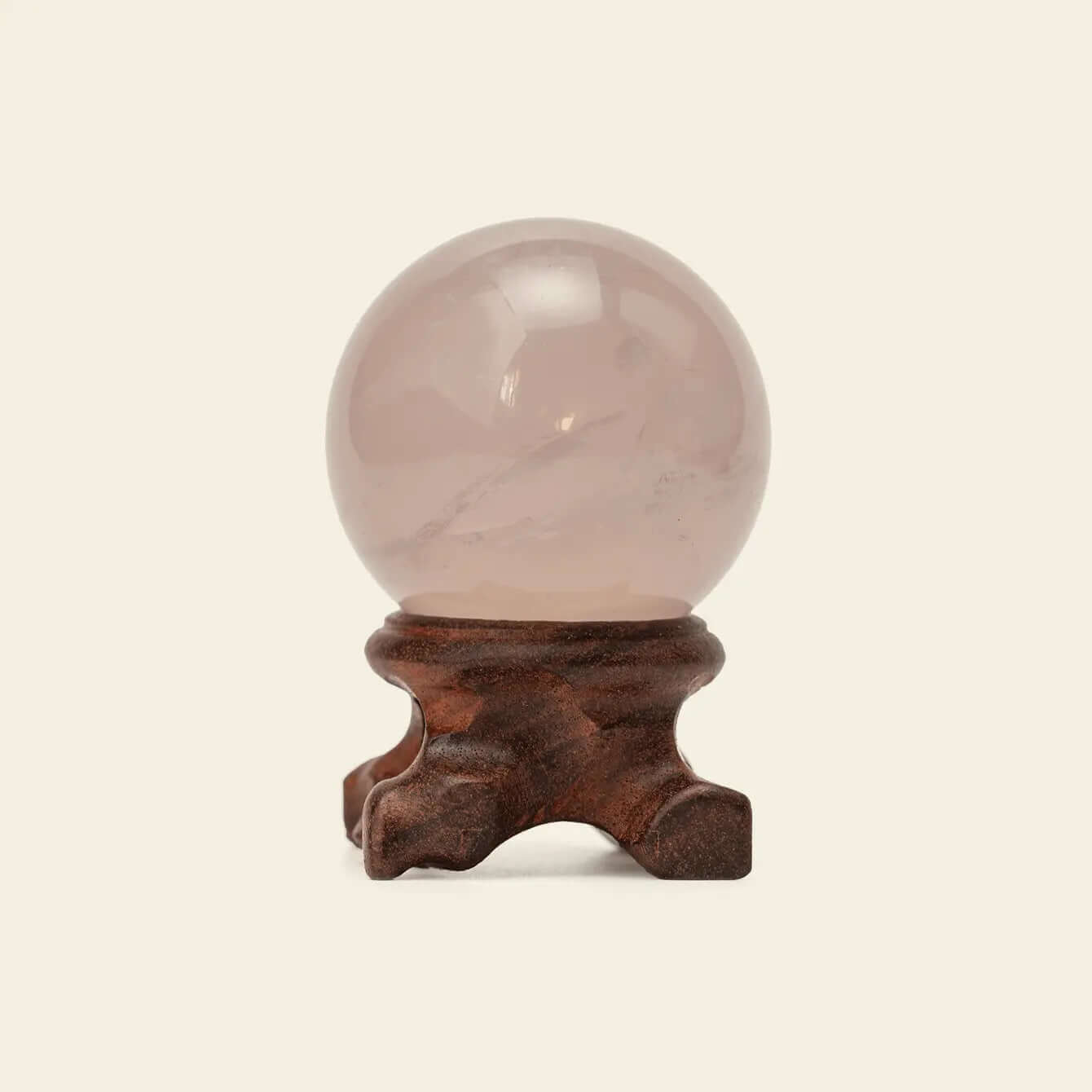
Zenify offers crystal spheres not as medical devices, but as handcrafted tools for contemplative practice. Each sphere serves specific meditation intentions based on traditional associations—not because the crystal radiates mystical energy, but because those associations create mental structure.
| Crystal Type | Traditional Association | Functional Use | Price |
|---|---|---|---|
| Rose Quartz | Love, compassion | Loving-kindness (metta) meditation focal point | From $35 USD |
| Amethyst | Clarity, calm | Deep meditation, visual trataka practice | From $129 USD |
| Clear Quartz | Amplification, clarity | Universal meditation, intention-setting | From $25 USD |
| Obsidian | Grounding, protection | Grounding practices, body scan meditation | From $28 USD |
The value proposition isn't supernatural healing—it's functional design. These spheres offer:
- Weight and temperature: Holding a cool, heavy stone provides sensory grounding
- Visual beauty: Natural patterns create gazing meditation focal points
- Tactile engagement: Smooth surfaces support hand meditation techniques
- Ritual structure: Using specific crystals for specific practices builds conditioning
- Aesthetic value: Beautiful objects elevate meditation space ambiance
The Middle Path: Using Crystals Responsibly
Responsible crystal use acknowledges their role as psychological and aesthetic tools while avoiding medical claims that could delay proper healthcare for serious conditions.6
You can appreciate crystals without abandoning critical thinking. The middle path looks like this:
DO:
- ✅ Use crystals as meditation focal points
- ✅ Appreciate their aesthetic and tactile qualities
- ✅ Build rituals around crystal use for consistency
- ✅ Acknowledge placebo benefits are real benefits
- ✅ Enjoy traditional associations as frameworks for intention
- ✅ Combine crystal use with evidence-based practices (meditation, therapy)
DON'T:
- ❌ Delay medical treatment for serious conditions
- ❌ Claim crystals cure diseases
- ❌ Make pseudoscientific claims about "vibrations" and "energy fields"
- ❌ Spend beyond your means on expensive crystals
- ❌ Dismiss those who find value in crystal practices
- ❌ Dismiss scientific skepticism as closed-mindedness
Practical Crystal Meditation Techniques
Treating crystals as meditation tools rather than magical objects allows practitioners to benefit from their tactile and visual qualities without cognitive dissonance.7
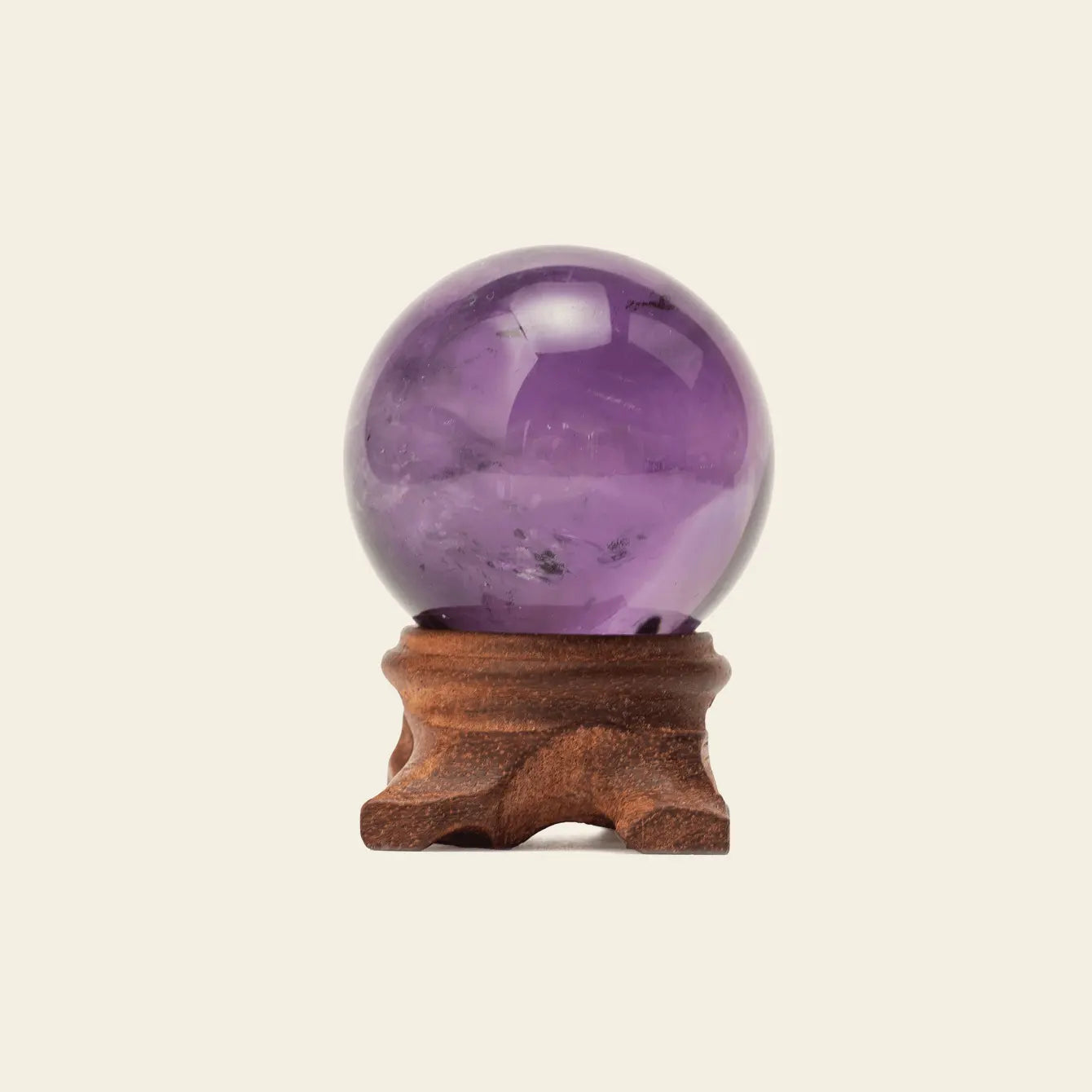
Here are evidence-compatible ways to use crystal spheres like Zenify's Amethyst Sphere ($129 USD) or Clear Quartz Sphere ($25 USD):
1. Hand Meditation (Tactile Grounding)
Hold a crystal sphere during seated meditation. The weight and temperature provide sensory anchoring when the mind wanders. The smooth surface supports gentle rotation—a kinesthetic element that engages restless hands while the mind settles.
Why it works: Proprioceptive feedback (awareness of object weight and position) activates present-moment attention, the foundation of mindfulness.
2. Trataka (Candle Gazing Variation)
Place a crystal sphere at eye level. Gaze softly at it for 5-15 minutes without blinking excessively. When tears form or eyes tire, close them and visualize the crystal's afterimage.
Why it works: Fixed-point gazing (trataka) is an established concentration technique in yoga traditions. The crystal simply provides an aesthetically pleasing focal point.
3. Intention-Setting Ritual
At the start of practice, hold your crystal and mentally state your meditation intention: "I cultivate patience" or "I release anxiety." Physically placing the crystal in your meditation space signals the beginning of practice.
Why it works: Classical conditioning. Pairing crystal handling with meditation entry cues your nervous system to shift into contemplative mode.
4. Breath Synchronization
Hold a crystal on your lap. During meditation, imagine breathing through the crystal—inhaling its color, exhaling tension into it. This visualization technique uses the physical object as a mental anchor.
Why it works: Visualization enhances breath awareness, a core meditation technique. The crystal provides a concrete visual reference.
Crystal Market Realities: Avoiding Exploitation
The crystal healing market, valued at billions globally, contains significant misinformation and predatory pricing that exploits sincere spiritual seekers.8
Honesty requires addressing crystal market problems:
The Pricing Scam
Some vendors charge hundreds of dollars for "rare" or "high-vibration" crystals that have zero measurable difference from affordable alternatives. A $500 "specially charged" amethyst sphere does not outperform a $50 equivalent in blind tests. Zenify's transparent pricing ($25-$520 based on size and mineral rarity, not mystical properties) reflects actual material and craftsmanship costs.
The False Hope Problem
Instagram healers selling crystals with promises to cure depression, anxiety, or physical illness without medical consultation cross ethical lines. While Zenify's crystal spheres can support meditation practices that reduce stress, they're not psychiatric treatment substitutes.
The Environmental Impact
Crystal mining causes significant environmental degradation and often involves exploitative labor practices. Responsible sourcing matters, though full transparency remains rare in the industry.
FAQ
Q: Do crystals actually emit measurable energy or vibrations?
A: No. Multiple scientific studies using sensitive equipment detect no energy fields from crystals beyond normal electromagnetic properties of all matter. The 2024 CNS Spectrums study specifically tested this and found crystal effects are entirely attributable to placebo—expectancy and conditioning.1 However, placebo effects produce real physiological and psychological benefits, so crystal users aren't imagining improvements—they're just misattributing the cause.
Q: Can I benefit from crystals if I don't believe in their metaphysical properties?
A: Absolutely. Treat crystals like Zenify's crystal spheres as meditation tools—aesthetically beautiful objects that serve as focal points, ritual anchors, and tactile grounding instruments. You don't need to believe in chakras or energy fields to appreciate a smooth, weighty sphere during hand meditation or as a visual focal point for concentration practice. The functional benefits (sensory grounding, ritual consistency, beautiful space) work regardless of belief.
Q: Is crystal healing just a placebo effect?
A: Yes, but the word "just" is misleading. Placebo effects are real: Harvard research shows placebos reduce pain by up to 50%, trigger genuine physiological responses, and activate authentic neural pathways.3 The key is understanding attribution: the benefit comes from your expectation and ritual, not the crystal's inherent properties. Combining crystal use with evidence-based practices (meditation, therapy) leverages placebo potential while maintaining scientific literacy.
Q: Are some crystals more powerful than others?
A: Not in measurable reality. Double-blind studies show people can't distinguish "powerful" crystals from glass fakes when visual identification is controlled.1 However, personal associations matter: if you strongly associate rose quartz with calm, using it may trigger greater placebo response than a crystal you associate with nothing. Zenify prices crystals based on mineral rarity, size, and craftsmanship—not unverifiable "vibrational frequency."
Q: Can crystals cure medical conditions?
A: No. Crystals are not medical devices and should never replace professional healthcare for physical or mental health conditions. While meditation with crystals may reduce stress (which can improve various health markers), they don't cure cancer, heal infections, or treat clinical depression. Use crystals as wellness accessories alongside proper medical care, not as alternatives to it.6
The Verdict: Appreciation Without Mystification
Crystal healing's core promise—that minerals emit energy fields producing specific physiological effects—doesn't survive scientific scrutiny. Studies consistently show zero measurable crystal effects beyond placebo. This is scientific consensus, not opinion.
Yet millions find value in crystal practices. This isn't mass delusion—it's humans discovering that ritual objects, beautiful aesthetics, and intentional practices support wellbeing. The misunderstanding lies in attribution: the benefit comes from the practice (meditation, intention-setting, ritual consistency), not the stone's metaphysical properties.
Zenify's approach bridges this divide: offering high-quality crystal spheres as meditation tools—functionally designed objects that support contemplative practice through their weight, temperature, visual beauty, and ritual utility. No magical thinking required. No scientific literacy sacrificed.
You can hold a rose quartz during loving-kindness meditation, appreciate its pink translucence as a visual anchor for compassion, and understand that its value lies in your intentional use—not cosmic vibrations. This middle path honors both empirical evidence and contemplative tradition.
The question isn't "Do crystals work?" but "How can I use crystals as effective meditation tools while maintaining intellectual honesty?" The answer: with clear understanding of what they are (beautiful minerals) and aren't (medical devices), used alongside evidence-based wellness practices, appreciated for aesthetic and functional qualities rather than supernatural powers.
In this framework, crystals become what they've always been—part of humanity's long relationship with beautiful natural objects—freed from the burden of miracle cure claims they can't support, valued for the genuine benefits they do provide: anchoring attention, structuring ritual, and beautifying the spaces where we seek calm.
References
- CNS Spectrums, "Placebo effects in alternative medical treatments for anxiety: false hope or healing potential?" 2024. Healing crystals demonstrated no anxiolytic effects beyond placebo, with symptom change mediated by expectancy and conditioning. https://www.cambridge.org/core/journals/cns-spectrums/article/placebo-effects-in-alternative-medical-treatments-for-anxiety-false-hope-or-healing-potential/86B7CACA827EC2C2FE837C399264312B
- Thought in Motion, "The History and Origins of Crystals," 2024. Archaeological evidence shows crystal use dating to 30,000 years ago, with therapeutic use in Traditional Chinese Medicine dating back 5,000 years. https://thoughtinmotion.net/the-history-and-origins-of-crystals/
- Harvard Health, "The Power of the Placebo Effect," 2024. Placebos can reduce pain by 50%, trigger genuine physiological responses including heart rate and blood pressure changes, and activate real neural pathways. https://www.health.harvard.edu/newsletter_article/the-power-of-the-placebo-effect
- Golden Lotus Mala, "Symbolism and Use of Gemstones and Crystals in Ancient Civilizations," 2024. Historical context of crystals used for meditation, chakra balancing, and protection in ancient India and Egypt. https://www.goldenlotusmala.com/blogs/meditation/historical-use-of-gemstones
- Zenify, "Crystal Spheres Collection," 2025. Rose Quartz (from $35), Amethyst (from $129), Clear Quartz (from $25), Obsidian (from $28), priced based on size and mineral quality. https://zenifyworld.com/collections/crystal-sphere
- Healthline, "Do Healing Crystals Work? Lore, History, Research," 2024. Evidence review on crystal healing safety and the importance of combining with evidence-based practices rather than using as medical alternatives. https://www.healthline.com/health/healing-crystals-what-they-can-do-and-what-they-cant
- ResearchGate, "Placebo effect of gemstones," 2022. Study showing gemstones promoted as healing tools have positive psychological effect on users. https://www.researchgate.net/publication/362388582_Placebo_effect_of_gemstones
- Crystal Age, "History of Crystals and Healing," 2024. Overview of crystal healing market and historical use across cultures from Sumerians to modern practices. https://www.crystalage.com/crystal_information/crystal_history/


